 Florida Painting & Renovation Licensing
Do Painters and Renovators Need a License in Florida?
Care, experience, and competence are your best defenses against hiring an incompetent contractor. Florida doesn’t test or license painters, or renovators who install flooring, tile, trim, and cabinetry, so no government card can tell you who will do the job right. Here is what the law actually requires of a painting or renovation company, what it doesn’t, and how to find the care, experience, and competence the law leaves for you to check.
Care
A company that protects your home, puts every promise in writing, and comes back to make it right.
Experience
Years of real local projects, reviews you can read, and a team that knows South Florida homes.
Competence
Trained, insured people who know the right prep, products, and process for every surface.
No, not for painting or most interior renovation work. Florida does not license painters, flooring and tile installers, trim carpenters, or cabinet installers, and since 2021 state law has stopped counties and cities from requiring a license for that work too. Palm Beach County dropped its painting certificate on July 1, 2025. Electrical, plumbing, structural, roofing, and architectural work still require state-licensed professionals.
What’s required to operate: a Palm Beach County business tax receipt and a city business tax receipt from the city where the company is based. Neither one tests skill or proves insurance, so anyone can call themselves a painter or renovator, and the company you choose matters more, not less.
Everything Required, Plus What Matters Most
Insurance
Liability insurance that protects your home, with certificates sent on request.
County & City Business Tax Receipts
Palm Beach County and City of West Palm Beach receipts, available on request.
Workers’ Compensation
Everyone on your property is covered by workers’ compensation or holds the state exemption that applies to them.
The Placidity Academy Training System
Insurance and tax receipts are the minimum. What protects your home is competence, and Florida doesn’t test for it, so we built our own standard. Every member of our team completes Placidity Academy training before they work in a client’s home.
An Owner With an Eye for Every Detail
Placidity’s owner, Moses Morales, has an incredible eye for detail and truly understands the painting and renovation process, from prep and materials to the final walkthrough. That understanding is the standard the Placidity Academy teaches, and the standard every project is held to.
- The Biggest Misconception
- Top Mistakes
- What the Law Says
- What Still Applies
- Licensed-Trade Work
- Lead Paint Rules
- Permits & Condos
- Red Flags
- Why Care Matters
- Check Any Company


Claiming to Know How to Paint Doesn’t Mean Someone Cares, or Actually Does
One of the biggest misconceptions about our industry is that anyone can be a painter. Rolling color onto a wall looks simple. Making it last is not. In our experience, 75% or more of the “painters” and “renovators” we see leave sloppy work behind, and most of it traces back to the same few causes. And just because someone says they’re licensed doesn’t mean they actually know how to paint.
Every Surface Is a Canvas
Placidity was founded with the sensibility of fine art in mind. We believe each surface in your home is a beautiful canvas, and our work is to bring it into its highest light. That means seeing what most painters walk past: how morning and evening light move across a wall, how a sheen reads beside the trim, how a clean line frames a room, and how color, texture, and finish come together into one calm, finished space.
An artist studies their materials, respects the surface, and doesn’t call a piece finished until every detail is right. We bring that same patience and eye to every wall, cabinet, floor, and molding we touch.
Knowing Paint Is Different From Owning a Brush
A professional understands what is actually in the can and what it needs to perform. That knowledge is invisible on the first day and obvious a year later.
- Which primer each surface needs, and which coatings bond to old oil or glossy finishes
- How stucco, bare wood, metal, drywall, and cabinets each take paint differently
- How Florida humidity, heat, and moisture in walls change what can be applied and when
- The difference between dry to the touch and fully cured
- How thick each coat must be to hold its color and protect the surface
Bad Spraying Practices
Wrong tips, uncalibrated pressure, and no back-rolling cause orange peel, runs, striping, thin coverage, and overspray on cars, floors, and windows.
Not Understanding Cure Times
Recoating too soon, rehanging doors and cabinet fronts before the paint cures, and pulling tape at the wrong time lead to sticking, peeling, and marks that never go away.
Not Being Detail Oriented
Wavy cut lines, missed spots, skipped caulk, unsanded patches, and paint on hardware and outlets. Details are what you look at every day.
Rushing Through Jobs
Skipped prep, one heavy coat sold as two, and paint over dirt or chalk to finish early. Speed shows up later as peeling and fading.
No Culture of Care
Floors, furniture, and landscaping left unprotected, messes left behind, and a home treated like a job site instead of someone’s home.
Not Caring About Quality
No final walkthrough, no touch-ups, and no pride in the finish. If it’s “good enough” to get paid, it’s done.
No Systems to Ensure the Work
No checklists, no training, no supervision, and no quality checks, so the result depends on whoever showed up that day.
Wrong Product for the Surface
Interior paint outside, wall paint on cabinets, or coatings that can’t bond to what’s underneath. It looks fine until it fails.
No Accountability After
Phone calls go unanswered once the check clears, and problems become your cost to fix.
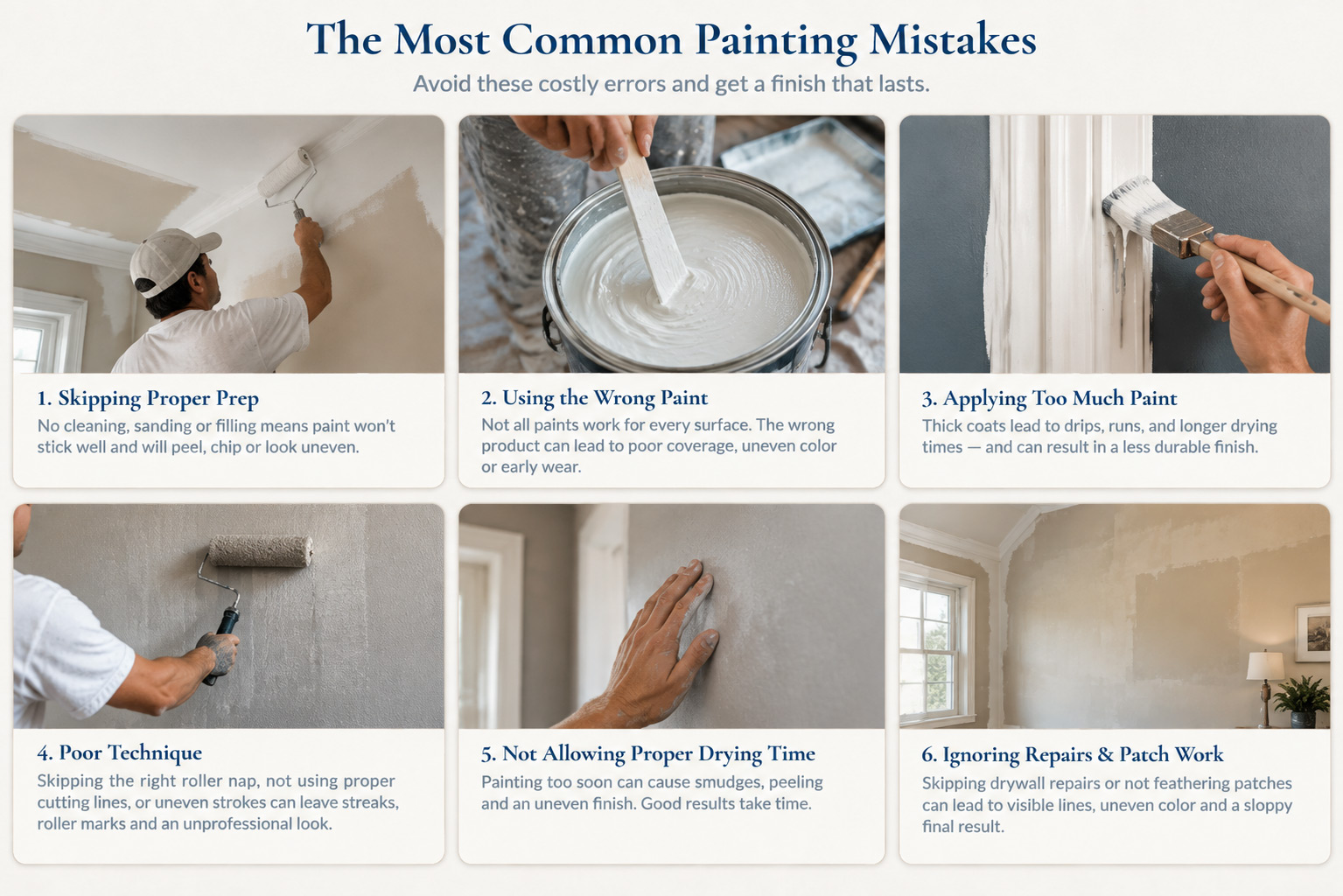
Six Mistakes That Ruin a Paint Job
There Is No Painting or Renovation Finish License in Florida
Florida licenses many construction trades, such as general, roofing, electrical, plumbing, and air conditioning contractors. Painting, flooring, tile, and cabinetry have never been among them, and recent laws removed the local licenses that used to fill the gap.
Painting and Finish Work Aren’t State-Licensed Trades
Florida’s contractor licensing law, Chapter 489, lists the trades that need a state license. Painting, flooring, tile, and cabinetry are not among them. No exam, no state board, and no state license number exist for that work on a home or business.
Source: Florida Statutes 489.105Local Governments Can’t Require One Either
State law now says a county or city may not require a license for work that doesn’t match a state-licensed trade. The law names painting first, along with flooring, cabinetry, handyman services, tile, plastering, stucco, pressure washing, and caulking.
Source: Florida Statutes 489.117(4)The County Painting Certificate Ended
Palm Beach County no longer requires a Certificate of Competency for painting. Painters now need a county business tax receipt, and the county offers a voluntary “installer” registration that requires proof of insurance and a bond but is not a license and has no exam.
Source: Palm Beach County preemption noticeIn Florida, anyone can print “professional painter” on a truck. With no license to rely on, care, experience, and competence are what stand between your home and a bad job.

The Rules a Painting Company Still Has to Follow
No license doesn’t mean no rules. These are the requirements and protections that apply to painting work in Palm Beach County, and how you can check each one yourself. A company that cares will hand you every one of these without being asked twice.
County & City Business Tax Receipts
Anyone selling services in Palm Beach County needs a county business tax receipt, and a company located inside a city also needs that city’s receipt. They’re tax registrations, not proof of skill or insurance.
Liability Insurance
Florida doesn’t require it for painting, which is exactly why you should. It pays for damage to your home or property. Many towns, HOAs, and condo associations require it before work can start.
Lead-Safe Certification
For paid work that disturbs more than 6 square feet of paint in a room, or more than 20 square feet outside, on a home built before 1978, the EPA requires a certified firm, a certified renovator, lead-safe work practices, and the Renovate Right pamphlet before work begins.
Town Registration & Approvals
Some towns require every contractor, painters included, to register and keep insurance on file before working; Gulf Stream is one example. Historic districts, HOAs, and condo associations often require written approval of exterior colors.
Contracts, Cancelling & Liens
Many contracts over $25 signed at your home can be cancelled in writing within three business days. On homes of one to four units, a direct contract over $2,500 must include Florida’s construction lien warning, because unpaid subcontractors or suppliers can file a lien on your home.
Workers’ Compensation
The company needs workers’ compensation coverage or the required exemption.
Who Can Legally Disturb Lead Paint
Lead paint was common in homes built before 1978. When paid work sands, scrapes, cuts, or removes that paint, federal law controls who may do it and how. Florida doesn’t run its own program, so the EPA’s Renovation, Repair and Painting (RRP) Rule applies here directly.
A Certified Firm and a Certified Renovator
- The company must hold EPA firm certification, which is good for five years
- A certified renovator must be assigned to every job, after an 8-hour accredited course with 2 hours of hands-on training and a refresher to stay certified
- Other workers must be trained on the job by that certified renovator
- The certified renovator must be on site when warning signs are posted and must perform the cleaning verification
Paid Work That Disturbs Old Paint
- Houses, apartments, and child-occupied facilities such as schools and child care centers built before 1978
- Disturbing more than 6 square feet of paint per room inside, or more than 20 square feet outside
- Window replacement and demolition of painted surfaces are always covered, whatever the size
- Painting, sanding, scraping, drywall and trim removal, and flooring or tile work that disturbs painted surfaces all count
Required Lead-Safe Practices
- Give you EPA’s Renovate Right pamphlet before work starts, and document it
- Post warning signs and contain the work area so dust and debris can’t escape
- Use practices that keep dust to a minimum
- Clean thoroughly and complete cleaning verification before the area is reopened
- Keep records of every job for three years
- Open-flame burning or torching of painted surfaces
- Power tools used without HEPA exhaust control
When the Rule Doesn’t Apply
- Minor repairs under the 6 and 20 square foot limits, except window replacement, demolition, and prohibited practices
- Housing built for elderly or disabled residents, unless a child under six lives or is expected to live there
- Zero-bedroom units such as studios
- Surfaces declared lead-free by a certified inspector or risk assessor, or tested lead-free by a certified renovator
- The rule places its requirements on paid contractors, not on homeowners

When a Project Crosses Into a Licensed Trade
Painting and finish renovation need no license, but some work that shows up on a painting or renovation estimate does. A competent company knows where its work ends and brings in the right licensed trade. One who offers these without the right state license, or a licensed partner, is a warning sign.
Ask for the License Number
- Roof coatings sold to waterproof, stop leaks, or extend the life of a roof fall under Florida’s roofing contractor license
- Electrical work such as moving, adding, or rewiring fixtures and outlets
- Plumbing work beyond simple fixture removal for painting
- Structural repairs to framing, beams, or load-bearing parts of the home
- Architectural or engineering plans when a project needs drawings for a permit
Painting & Finish Renovation
- Interior and exterior painting, staining, and sealing
- Pressure washing and surface prep
- Stucco patching, plastering, and drywall repair
- Flooring, tile, trim, crown molding, and cabinetry installation
- Caulking, cabinet finishing, and handyman tasks that don’t require a licensed trade
“…all kinds of roofing, waterproofing, and coating, except when coating is not represented to protect, repair, waterproof, stop leaks, or extend the life of the roof.”Definition of a roofing contractor, Florida Statutes 489.105(3)(e)
You can look up any Florida construction license on the Florida DBPR license search.
How Placidity Handles Permits and Approvals
Most painting and many finish renovations don’t need a building permit, but some do, and condos add their own rules. Here’s how we handle it, so you never have to sort it out alone.
We Work With the City
Permit rules differ from city to city. When your project needs one, we work with your city to get the permit and schedule any required inspections, before work begins.
We Provide the Documents to Move Forward
We work directly with your HOA or condo association and provide the documents they need to approve your project, such as our certificate of insurance, product specifications, and scope of work. The most common approval is new flooring in a condo, which mainly needs the association’s approval and often has rules for sound underlayment, work hours, and insurance.
Sound, Fire & Water Barriers
We cover every aspect of code on our work, including sound barriers under condo floors, fire barriers where code requires them, and water barriers behind tile in wet areas.
Trusted Licensed Partners
Electrical, plumbing, and architectural work is performed by trusted partners who hold the required Florida licenses. We organize their work with you, so your project stays one coordinated plan.

What to Watch For When Anyone Can Paint or Remodel
Without a license to lose, a careless painting or renovation company has little to stop it from doing it again. Each of these red flags is a sign that care, experience, or competence is missing.
“We’re State Licensed”
Florida doesn’t license painters or finish installers. If someone shows a “painting license” number, it’s usually a business tax receipt or a business registration being passed off as proof of skill.
Most of the Money Up Front
A large cash deposit before any work starts, or full payment before the final walkthrough, leaves you with nothing to hold if the crew disappears.
No Written Scope
A number on a business card or a text message isn’t a plan. Without prep, coats, products, and surfaces in writing, there’s nothing to hold anyone to.
Storm Chasers & Door Knockers
After hurricanes, out-of-area crews go door to door with “leftover paint” deals and today-only prices. Many are gone before the warranty would ever matter.
“Insurance? We’re Covered”
A photo of an old certificate, or a promise to send it later, isn’t coverage. If a worker is hurt or your home is damaged, it can become your claim to deal with.
A Warranty Only Spoken Out Loud
“We stand behind our work” means nothing unless it says what’s covered, for how long, and how you make a claim, in writing, with a company that will still answer.

When Anyone Can Claim to Be an Expert, Care, Experience & Competence Are the Difference
A license would at least tell you someone passed a test. Without one, the only proof is what a company does: who it sends, what it puts in writing, and whether it comes back when something isn’t right. That’s why hiring a company that genuinely cares, and stands behind its work, matters even more in Florida.
Real Insurance
Workers’ comp and liability that cover the people actually in your home, with certificates available when you ask.
Trained People
A company that teaches its own standards for prep, products, and finish, so skill doesn’t depend on who happened to show up today.
Written Accountability
A written scope, a written warranty, and changes approved in writing, so every promise can be checked later.
A Track Record
Years of reviews, real project examples, and neighbors you can ask. Look at how a company answers its complaints, not only its praise.
One Accountable Lead
A single person who plans the job, checks the work, and answers your call, from the first visit to the final walkthrough.
A Company That Stays
A local business with an office, a reputation, and a reason to come back and make it right years from now.
We Earn Trust the Way a License Can’t
We’ll never call ourselves “state licensed” for painting or finish renovation, because Florida doesn’t issue one. Placidity carries the necessary insurance: liability insurance for your home, and workers’ compensation or the required exemption for everyone on your property, with certificates sent on request. Copies of our Palm Beach County and City of West Palm Beach business tax receipts are available on request too. Because Florida doesn’t license painting, no license limits where a painting company can work in the state, and wherever we work, we follow that town’s contractor registration rules. When a project needs a permit, we work with the city to get it, and licensed partners handle any electrical, plumbing, or architectural work.
You also get a written scope and one project lead from start to finish. Nothing changes without your written approval, and the people who quote your project are the people who answer for it.
Florida Has No Painting Exam, So We Built Our Own Standard
When the state doesn’t test painters, competence has to come from somewhere. That’s why the Placidity Academy is so valuable. Every member of our team completes Academy training before they work in a client’s home: a Foundations Certification in how you and your home are treated, and a Trade Certification in the craft itself. It’s how care, experience, and competence show up the same way on every job, whoever is on your project.
Check Any Painter or Renovator in 10 Minutes
These checks work on any painting or renovation company, including ours. Each one tests care, experience, or competence. Most take a minute online, and all of them are free.
Business Registration
Search the company name on Sunbiz. Look for an active status and the names of the owners.
Liability Certificate
Ask for their certificate of liability insurance.
Business Tax Receipts
Ask for copies of the current Palm Beach County receipt and the city receipt where the company is based.
Lead-Safe Firm
For a home built before 1978, confirm the firm in the EPA firm search and ask for the renovator’s certificate.
Written Scope
Prep, repairs, products, coats, colors, and surfaces, all in writing, with a clear payment schedule.
Written Warranty
What’s covered, for how long, what voids it, and exactly how to make a claim.
Reviews & References
Read the newest and the worst reviews, see how the owner responds, and ask for a recent local reference.
Workers’ Compensation
Workers’ compensation coverage or the required exemption.
Want more side-by-side help? See how to compare painting quotes line by line.
Florida Painting & Renovation License FAQ
Do painters need a license in Florida?
No. Florida does not issue a state license for painting, and state law does not let counties or cities require one either. Painting businesses still need county and city business tax receipts, workers’ compensation coverage or the required exemption, and EPA lead-safe certification for covered work on homes built before 1978.
Does Palm Beach County require a painting license?
Not anymore. Palm Beach County stopped requiring a Certificate of Competency for painting on July 1, 2025, because of state preemption laws. Painters need a Palm Beach County business tax receipt, plus a receipt from the city where they are based, and the county offers a voluntary installer registration that is not a license.
A painter told me they are state licensed. What does that mean?
Ask for the license number and look it up. Florida has no painting license, so the number is usually a business tax receipt, a business registration, or a license for a different trade. None of those prove painting skill or insurance.
Does a painter need workers’ compensation in Florida?
Yes. A painting or renovation company needs workers’ compensation coverage or the required exemption.
Is liability insurance required for painters in Florida?
State law does not require it for painting. Many towns, HOAs, and condo associations do, and you should too. Ask for their certificate of liability insurance.
What is lead-safe certification and when does it matter?
If your home was built before 1978, federal EPA rules require a certified firm and a certified renovator for paid work that disturbs more than 6 square feet of paint in a room or more than 20 square feet outside. The firm must follow lead-safe practices and give you the Renovate Right pamphlet before work starts.
Do renovators need a license for flooring, tile, or trim in Florida?
No. State law lists flooring, tile, cabinetry, and interior remodeling among the job scopes local governments may not license, as long as the project doesn’t include work that needs a state license. Electrical, plumbing, structural, and architectural work still require licensed professionals.
Do I need approval to install new flooring in my condo?
Usually, yes. Most condo associations require written approval before new flooring goes in, and many set rules for sound underlayment, work hours, and contractor insurance. Check your association’s rules before you order materials. Placidity helps clients prepare the request and meet those requirements.
Does Placidity get permits?
Yes. When a project needs a permit, Placidity works with the city to get it. Placidity also works with HOAs and condo associations and provides the documents they need to approve a project, such as a certificate of insurance, product specifications, and scope of work. Electrical, plumbing, and architectural work is done by trusted partners with the required Florida licenses, coordinated with the homeowner.
Do I need a permit to paint my house in Palm Beach County?
Painting usually does not need a building permit. Some towns require contractors to register before working, and many HOAs and condo associations require written approval of exterior colors. Roof coatings, electrical, plumbing, and structural repairs can need permits and a state-licensed contractor.
Can I cancel a painting contract I signed at home?
Under Florida’s home solicitation sale law, many contracts over $25 signed at your home can be cancelled in writing until midnight of the third business day after you sign. Read your contract for the cancellation notice and ask a lawyer about your specific situation.
What do painters need to operate legally in Palm Beach County?
A Palm Beach County business tax receipt, plus a business tax receipt from the city where the company is located. They also need workers’ compensation coverage or the required exemption, EPA lead-safe certification for covered work on homes built before 1978, and any registration a town requires before contractors can work there.
If anyone can paint without a license, how do I choose a painter?
Care, experience, and competence are your best defenses. Look for what a license would have promised: real insurance, trained people, a written scope, a written warranty, a track record of reviews, and a company that stays reachable after the job. Check each one yourself before you sign.
Let’s Show You What We Put in Writing
Care, experience, and competence are easier to see in person. Meet with us, walk your space together, and ask us every question on this page. We’ll show you our insurance, explain how the Placidity Academy trains our team, and give you a written plan, so you can decide with confidence.
Locally owned in Palm Beach County. Residential and commercial. Insured. Written scope.
- Florida Statutes 489.117: local governments may not require a license for painting and similar job scopes.
- Florida Statutes 489.105: state contractor categories, including the roofing contractor definition covering roof coatings.
- Palm Beach County Certificate of Competency preemption notice: painting certificate no longer required as of July 1, 2025.
- Palm Beach County Tax Collector, local business tax and Florida Statutes 205.042: county and city business tax receipts.
- U.S. EPA Renovation, Repair and Painting program, work practices, renovator training, firm certification, and RRP frequent questions: lead-safe rules for homes built before 1978.
- Florida Statutes 501.025 and 713.015: home solicitation cancellation and construction lien notice.


Painting and Renovations for Palm Beach County, under one calm process.

















(561) 677-8919
222 Lakeview Ave Suite 800, West Palm Beach, FL 33401